Techleap, the community of the Netherlands' top founders, was going commercial — and needed a membership platform. But the real assignment was a new way of building: an AI workflow where the whole team ships, no designer–developer hand-off.
Techleap — 500–600 curated founders, government-funded and going commercial — needed paid memberships live before its flagship event, where for the first time founders needed a membership to attend. Real stakes, but a familiar kind of project. What made it different was how it had to be built.
The team was eight people wearing several hats — no in-house designers or engineers to lean on long-term. The community director's bet, one that only made sense after AI: everyone on the team should be able to ship features themselves, without waiting on a designer or a developer hand-off. My job was to build the platform and — more importantly — make that way of working real.
I was a freelancer on a temporary contract. If the platform only worked with me in the room, I'd have failed — it had to outlast me.
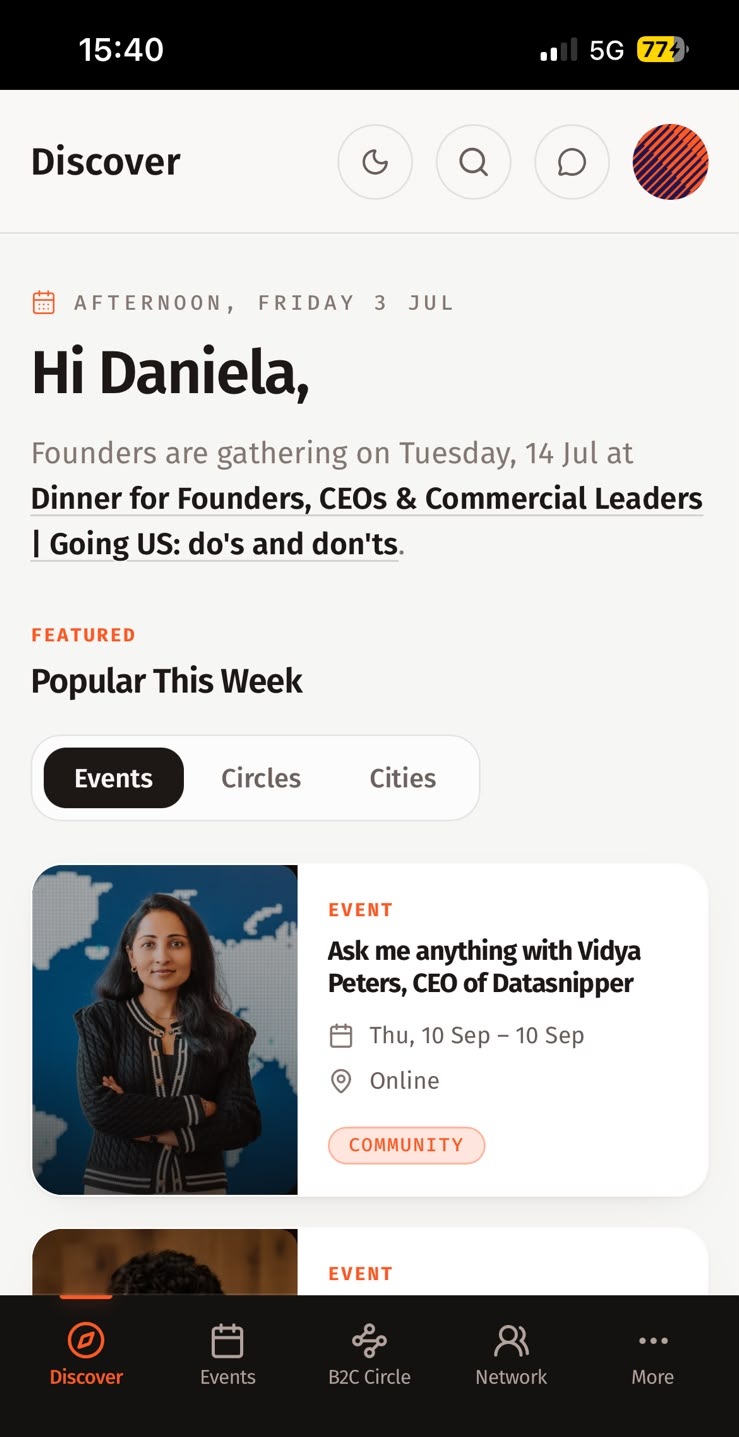
One place to connect, find and join events, and see who's in the community.
To charge memberships, collect the right founder data to curate better, promote its in-person products, and give founders a marketplace to sell to each other.
The first version was built the traditional way — me as the designer plus two developers. Then AI changed the question. We wanted to move fast, so the goal became to vibe-code the platform itself, with a setup safe enough to actually ship. The loop we set up:
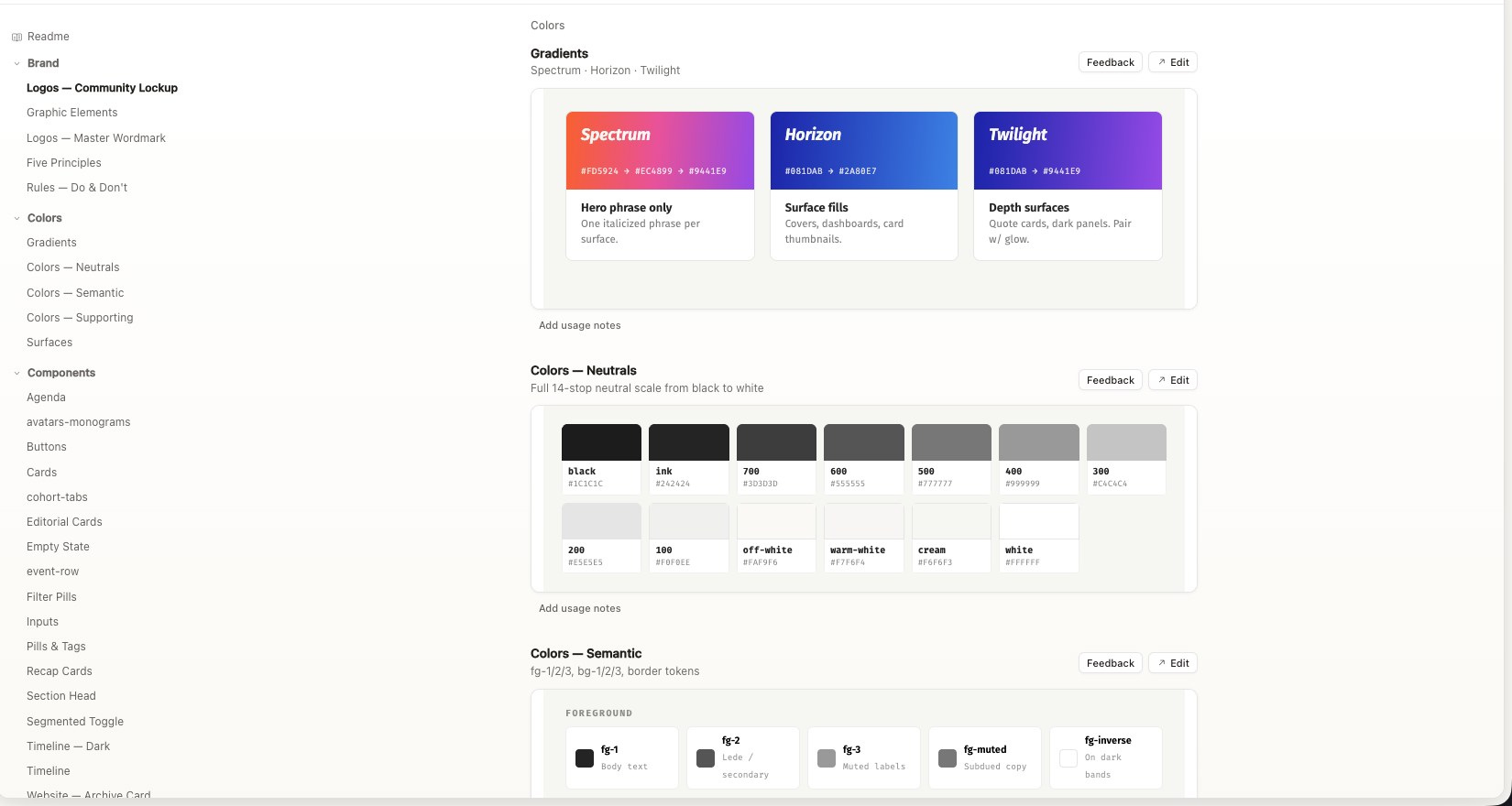
Built from Techleap's brand guidelines and tightened, then connected into Replit and used by Claude — it kept every step of the loop on-brand without a designer in the room. It became the backbone of Techleap's communication: the platform, the new website, and their social and printed content.
The gap: founders told me Techleap was great at big events — but had no intimate space to go deep.
The answer: Circles — 7–8 founders at the same stage and vertical, meeting quarterly. First one: B2C founders at growth stage.
My part: designed the format from founder conversations, then ran it with a colleague — facilitating sessions and feeding what I learned back into the product.
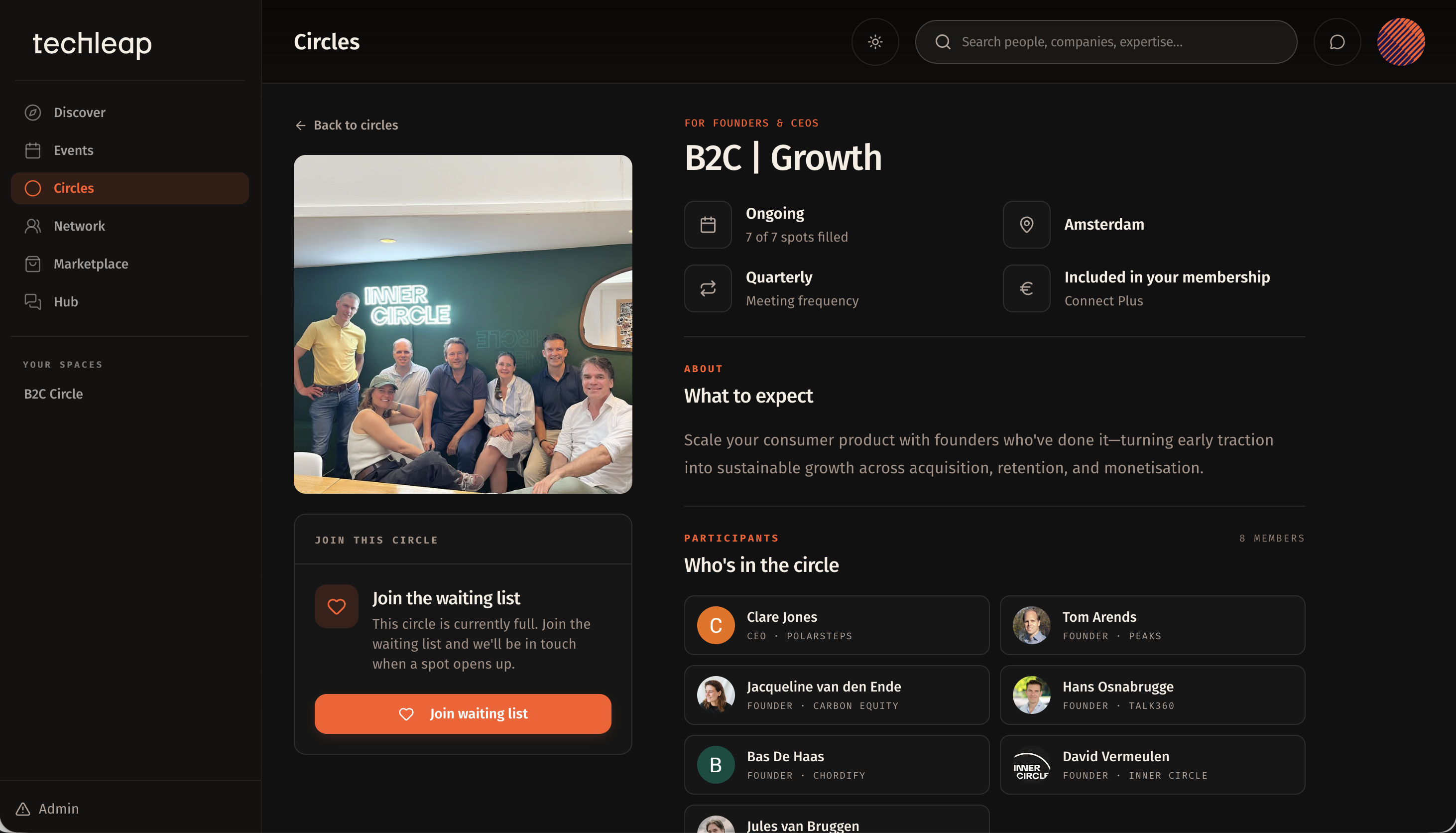
Circles are listed on the platform; founders apply by answering 5 key questions.
Applications reviewed, members approved — keeping each Circle curated.
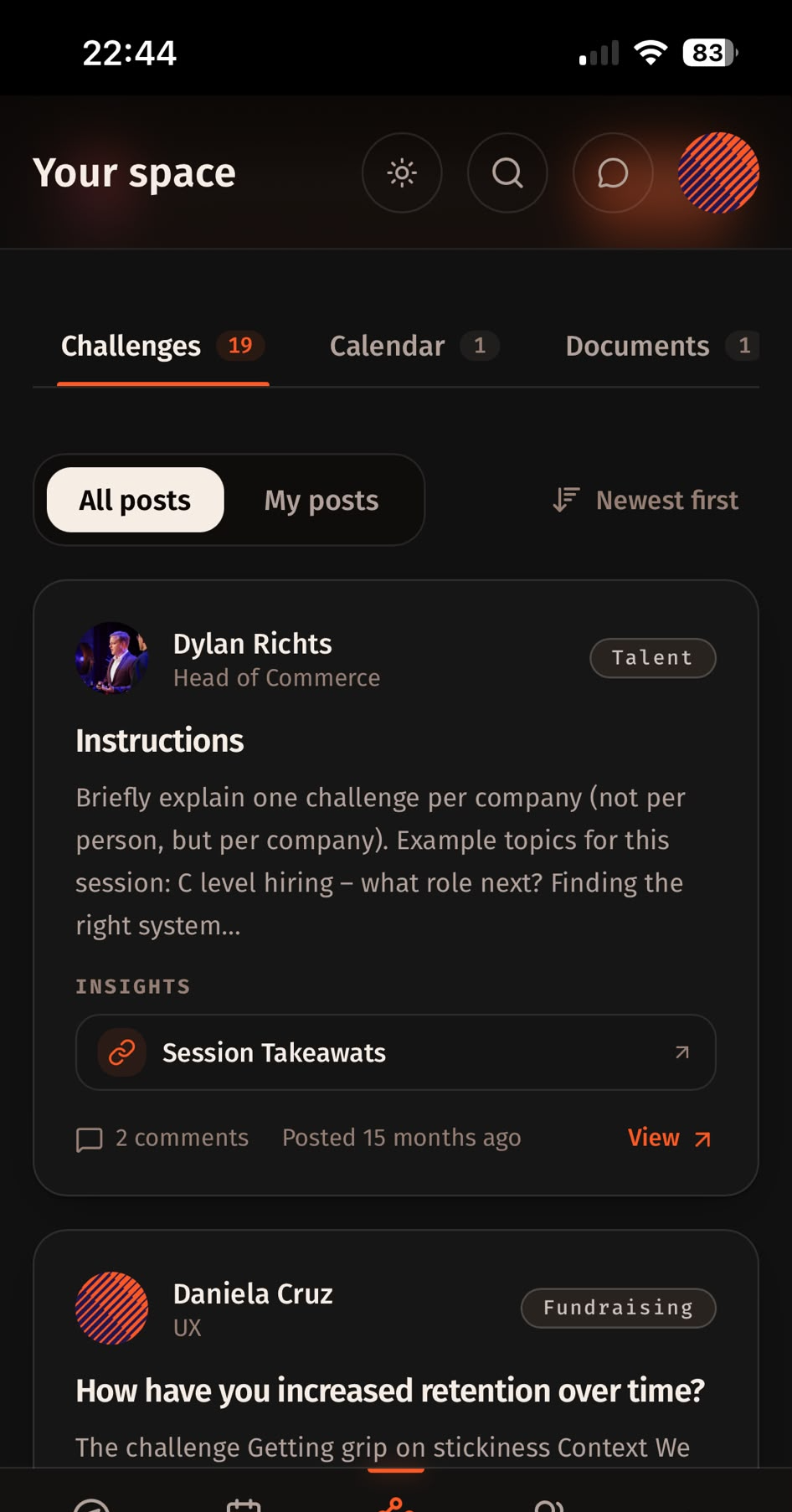
The platform auto-creates a shared space: sessions, challenges, documents, group chat.
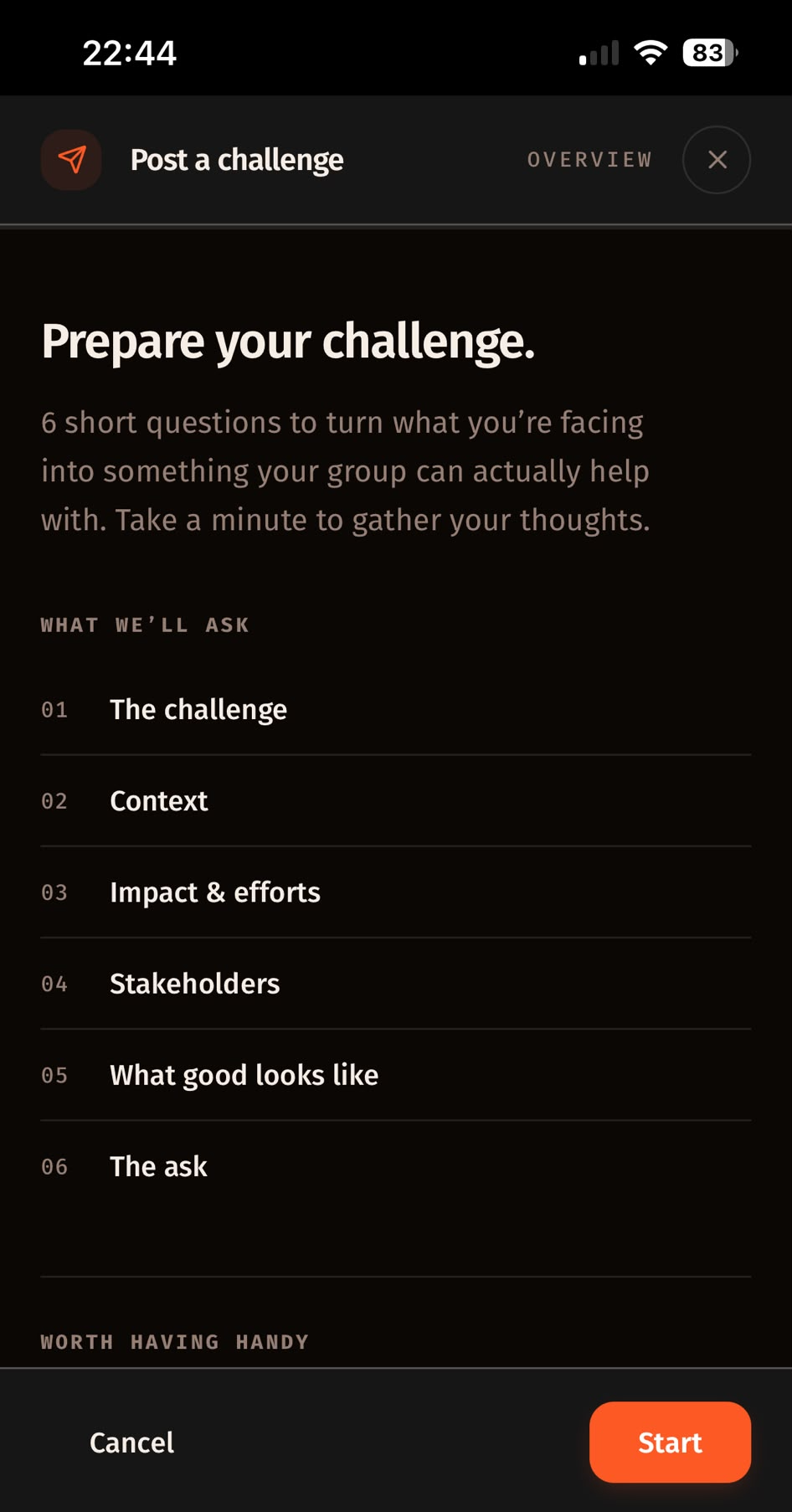
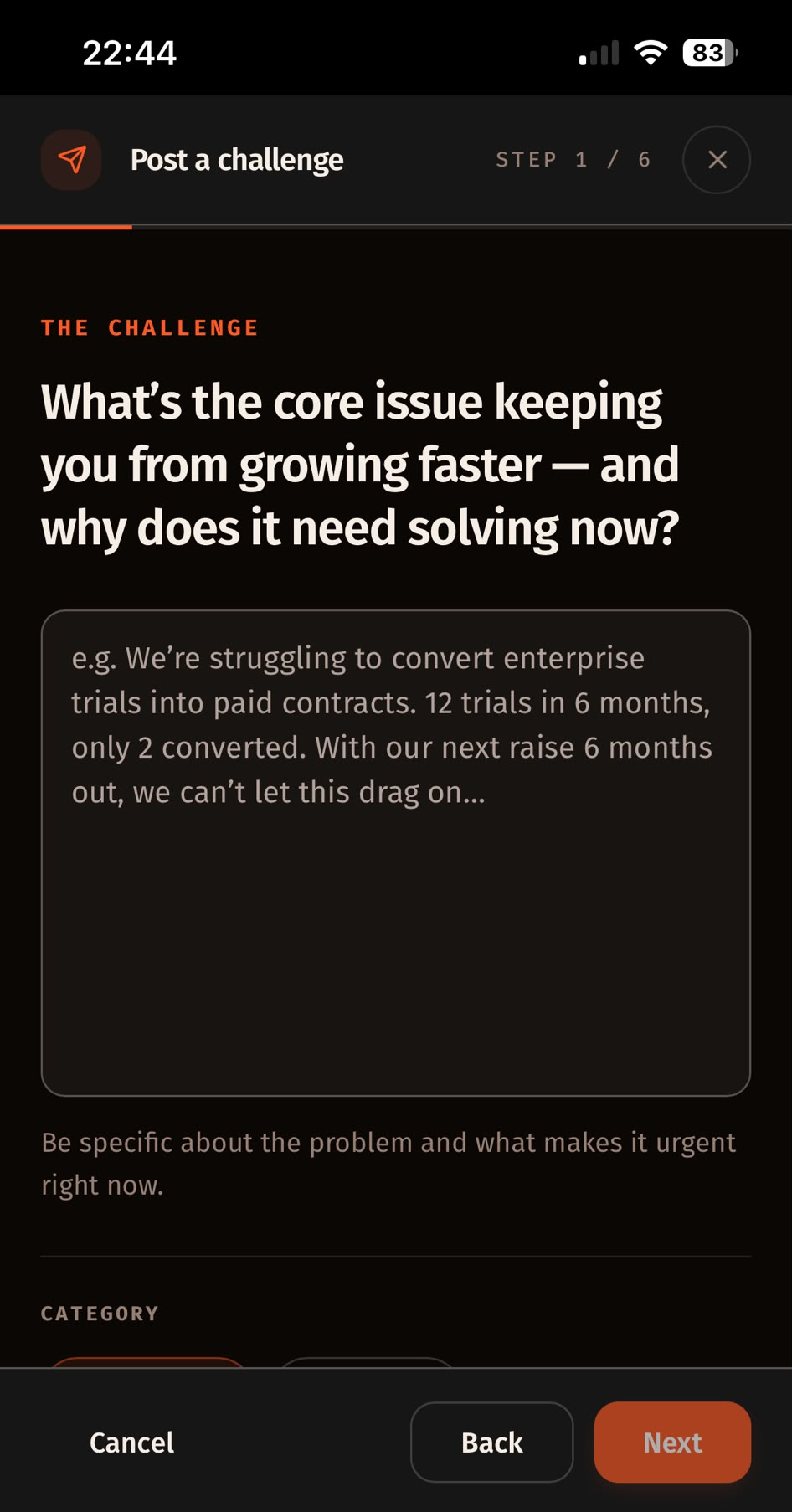
The session's host writes a challenge; the platform guides them to prepare it well.
Everyone gets the challenge by email before the session, with time to prepare.
The host takes the hot seat; members follow the challenge on their phones to think along.
The facilitator, recording and taking notes, posts the main takeaways afterward.
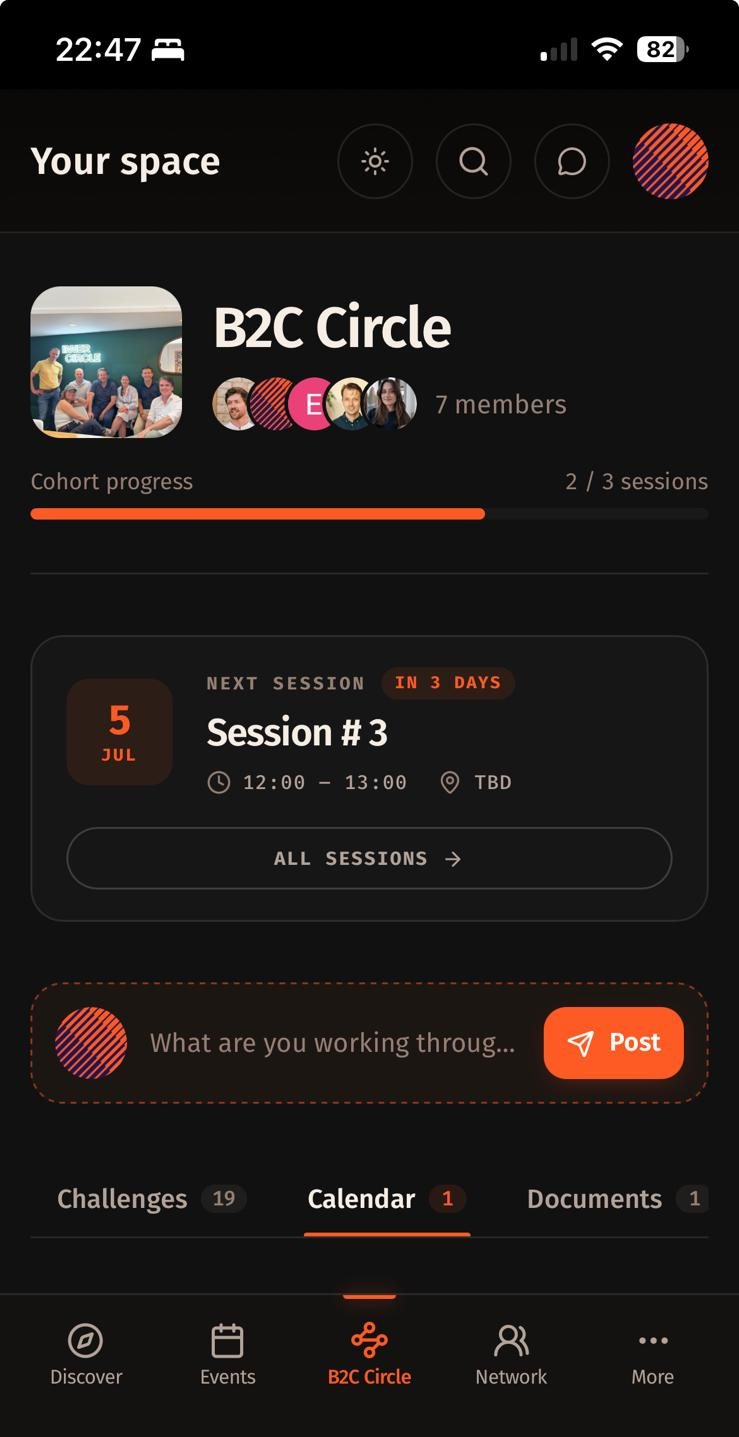


Posting and charging for events, memberships and Circles, a member network and directory, and founder data — the features came from talking to founders about what they actually needed, and from what Techleap needed to run a commercial community.
I had to relearn how I work — and leveraging AI tools meant shipping roughly ten times faster than I could have before. Feedback on the platform has been great, and the process has let the whole team produce and experiment in a new way.
Velocity matters to Techleap — the point was always to fail fast and try new things. Matching the engineering to the scale (a few hundred curated users) made that possible: speed beat purity.
That was the point: not one launch, but an operation that can run itself.