Polaroid had a loyal following but a barely-used app. I designed Creative Call — a photo challenge that gave people a reason to keep opening it. I did the research and the design. It's still in the app today.
How to nail it: get close, find soft window light, and let your subject look just off-camera.
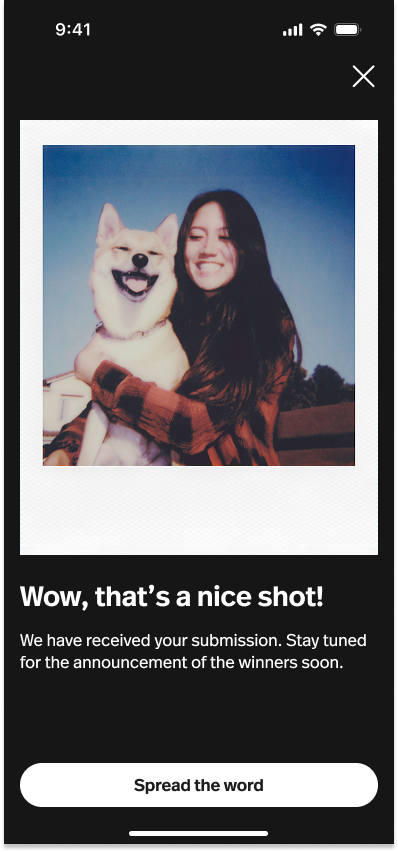
More shooting means more revenue. The problem: people only really shot around the holidays, and the community that could inspire year-round shooting had grown up outside the app. The app was a camera utility — not a destination.
Get users to the app early, and keep them motivated to shoot. Measured by one thing: people coming back month after month.
A large share of Polaroid's customers are new — people who received the camera as a gift. The camera looks easy. Shooting well isn't. Light, distance, angles, the quirks of instant film — none of this is obvious. Film isn't cheap, so bad shots sting. Most people get discouraged early and stop shooting before they ever find their footing.
This is a journey problem — it comes down to two questions:
How do we get users into the app as soon as possible after unboxing?
And once they're there, how do we educate them, and keep them motivated to keep shooting?
I joined Polaroid as a freelancer, brought in to move fast and experiment. I owned the design end to end — built on existing research and complemented it with my own.
Done over perfect.
Low budget, simple layouts that could be reused across future experiments, no unnecessary complexity. That constraint shaped every decision.
I built on existing research and complemented it with my own. It pointed to three things that get people shooting more and sticking around:
Tips, techniques, and tricks to help new users improve faster and waste less film.
Seeing what others shoot — for inspiration, validation, and a sense of belonging.
A prompt or theme that gives people a reason to pick up the camera today.
Across interviews the same thing surfaced — people wanted a reason, and a little guidance, to keep shooting. The app gave them neither.
“Even though the camera feels very playful I'd like some more professional advice and inspiration — maybe pro photographers showing what comes out well on a Polaroid.”
“There's some really great info on how to shoot a Polaroid out there. I'm very invested in the community forums now, but not really in the app.”
“I'll shoot a whole pack on a trip, then the camera just sits on the shelf for months. I need a nudge to actually pick it up.”
“Half my early shots came out too dark and I had no idea why. A few pointers in the app would've saved me so much film.”
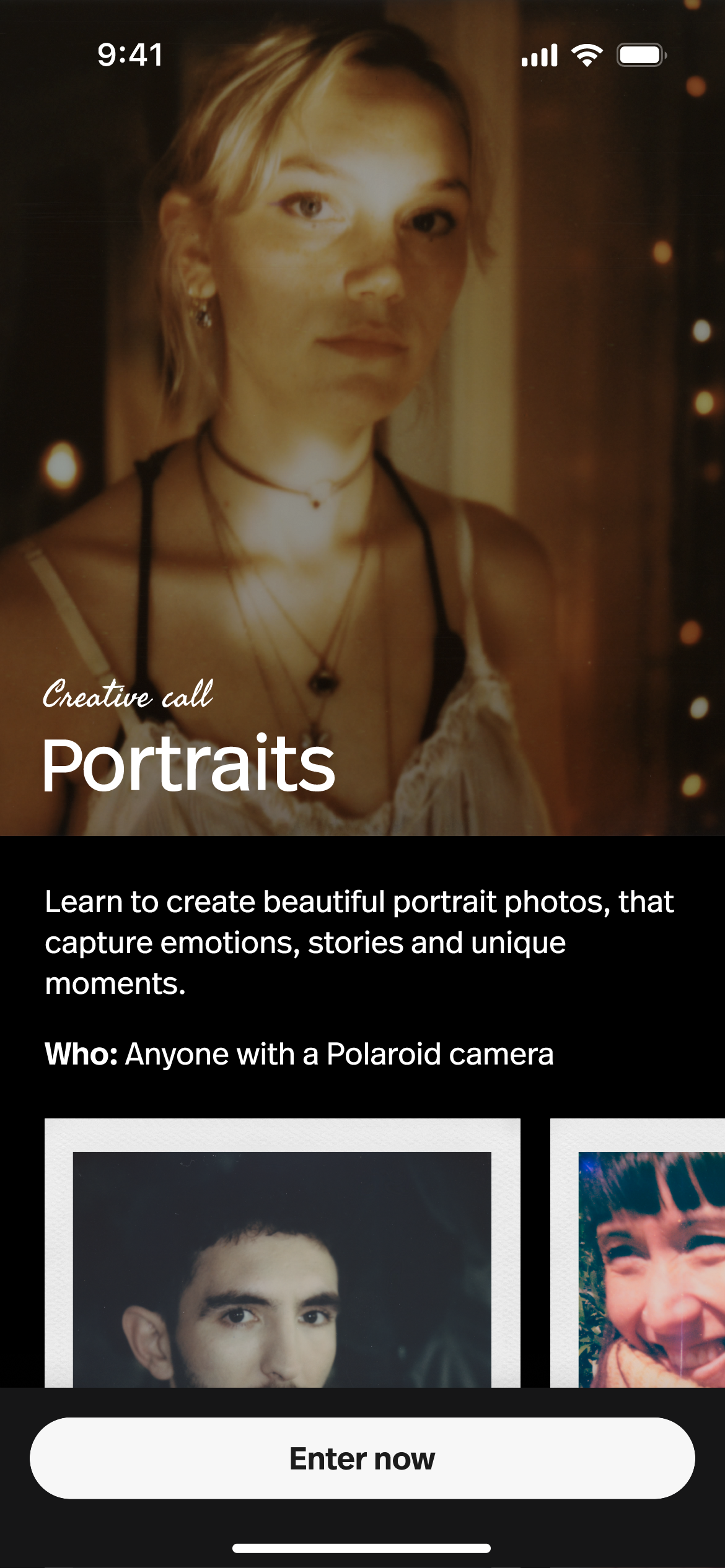
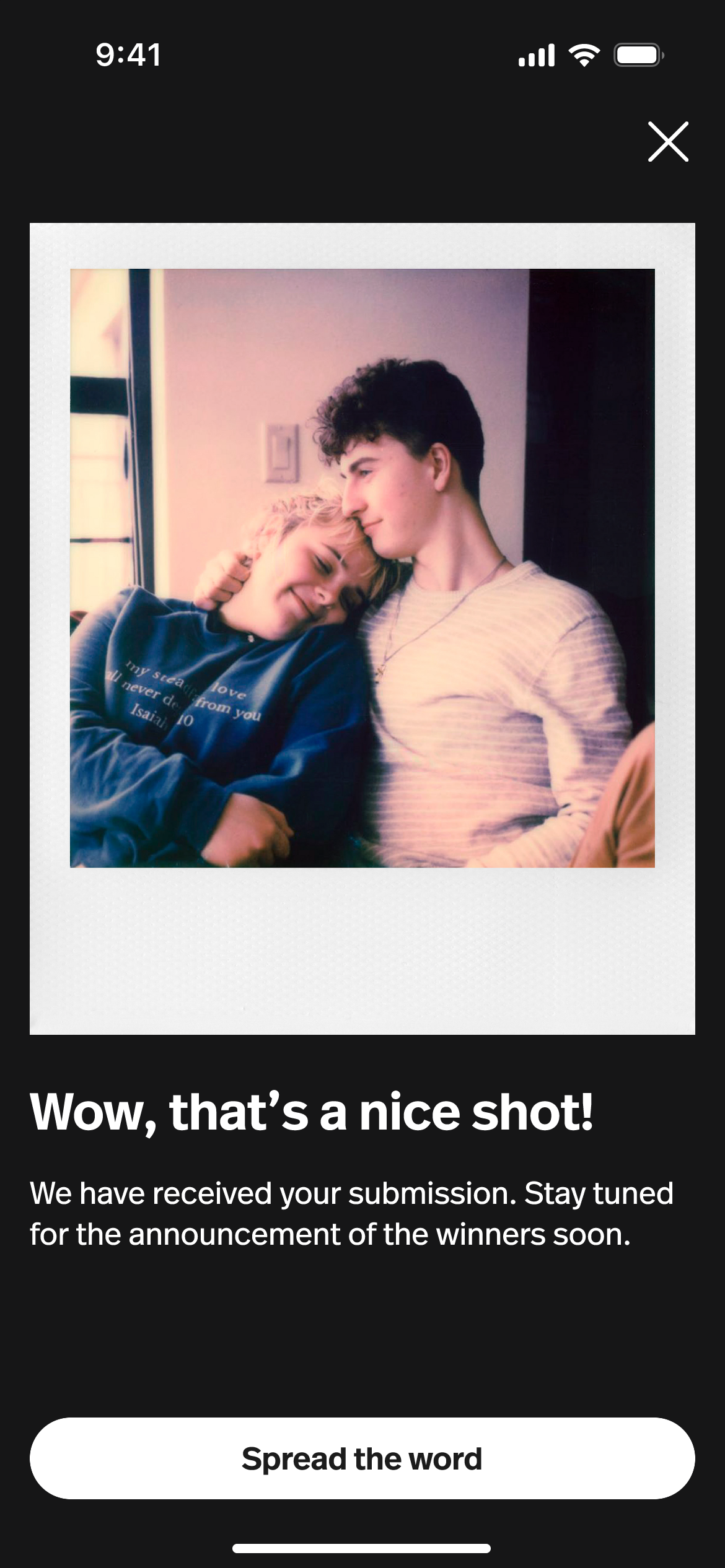
A recurring photo challenge inside the app. Polaroid sets a theme, users shoot and submit, entries are featured in the gallery, winners celebrated in the app and across Polaroid's channels — low friction, repeatable every month.
The broader goal was a full education initiative, including an AI feature to analyse shots and diagnose mistakes. That wasn't buildable yet — cost, dependencies, team constraints. Rather than wait, we focused on what we could control: making the app feel alive and giving people a reason to come back.

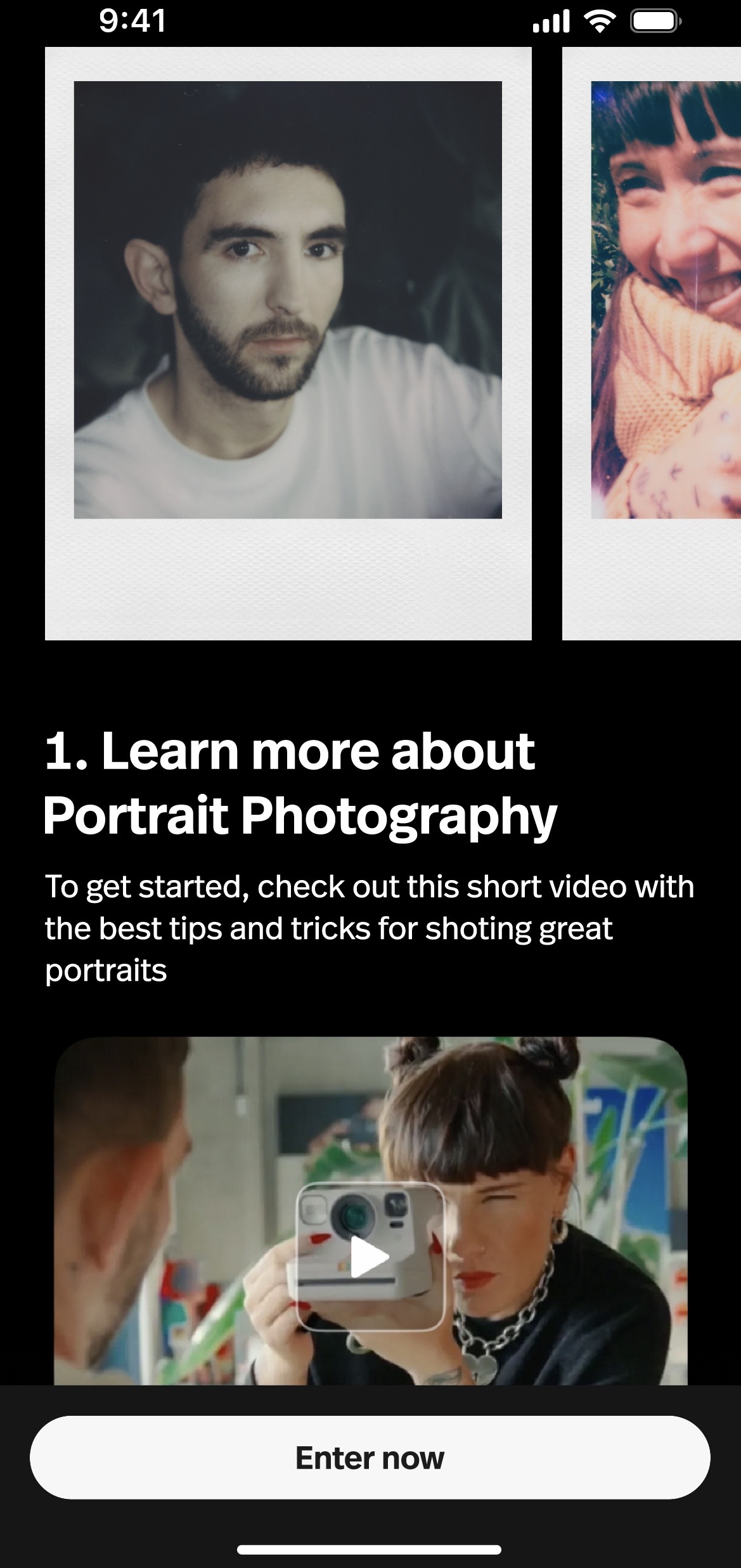
Stage — the monthly theme, tips video, and entry CTA.
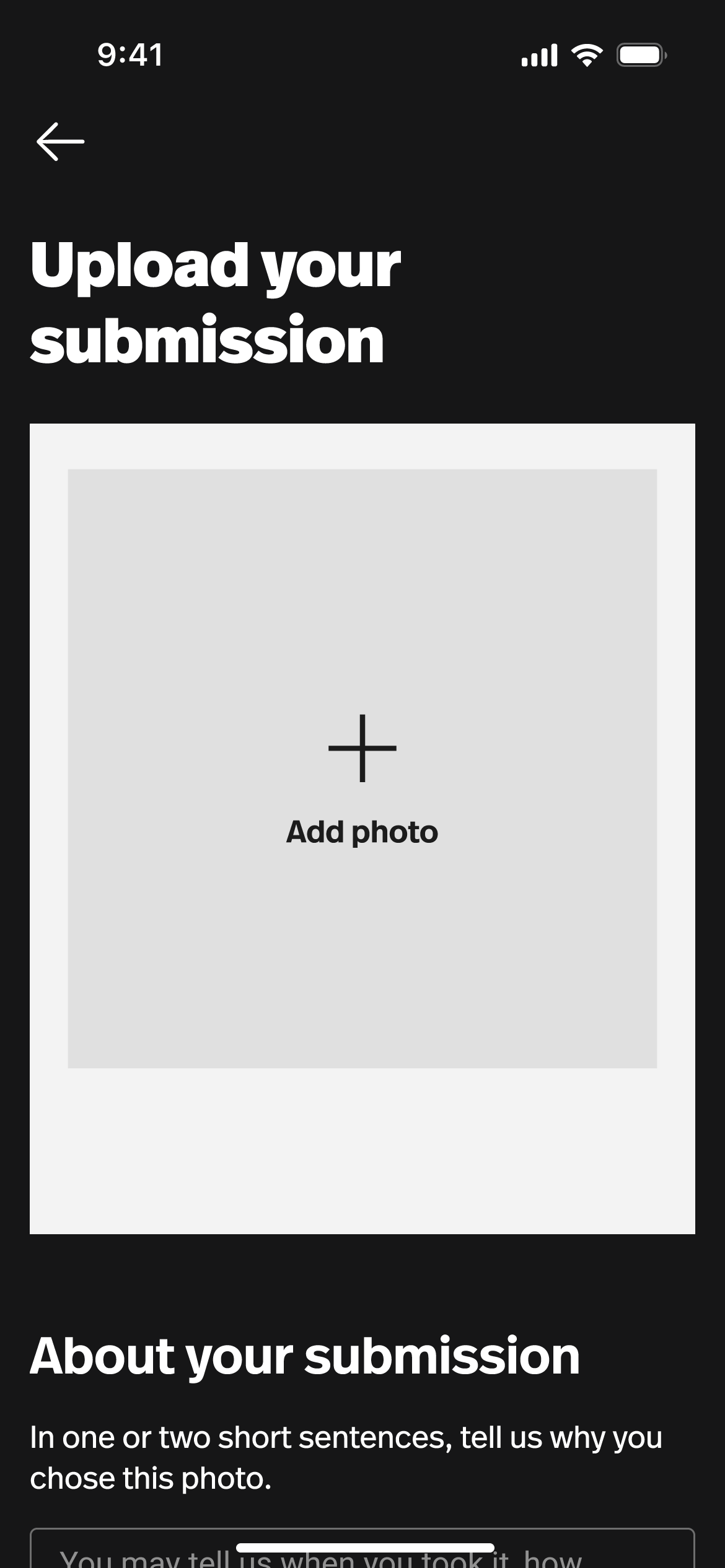
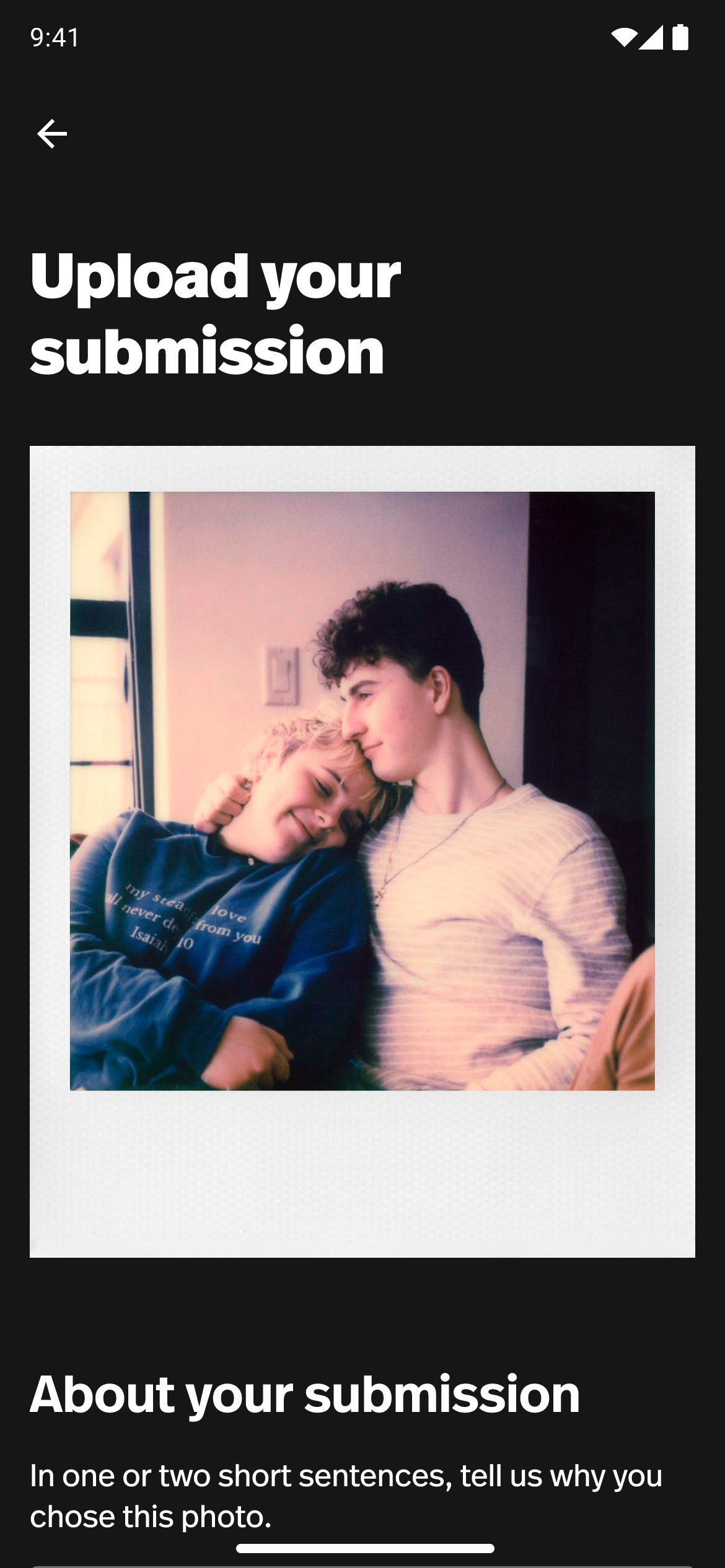
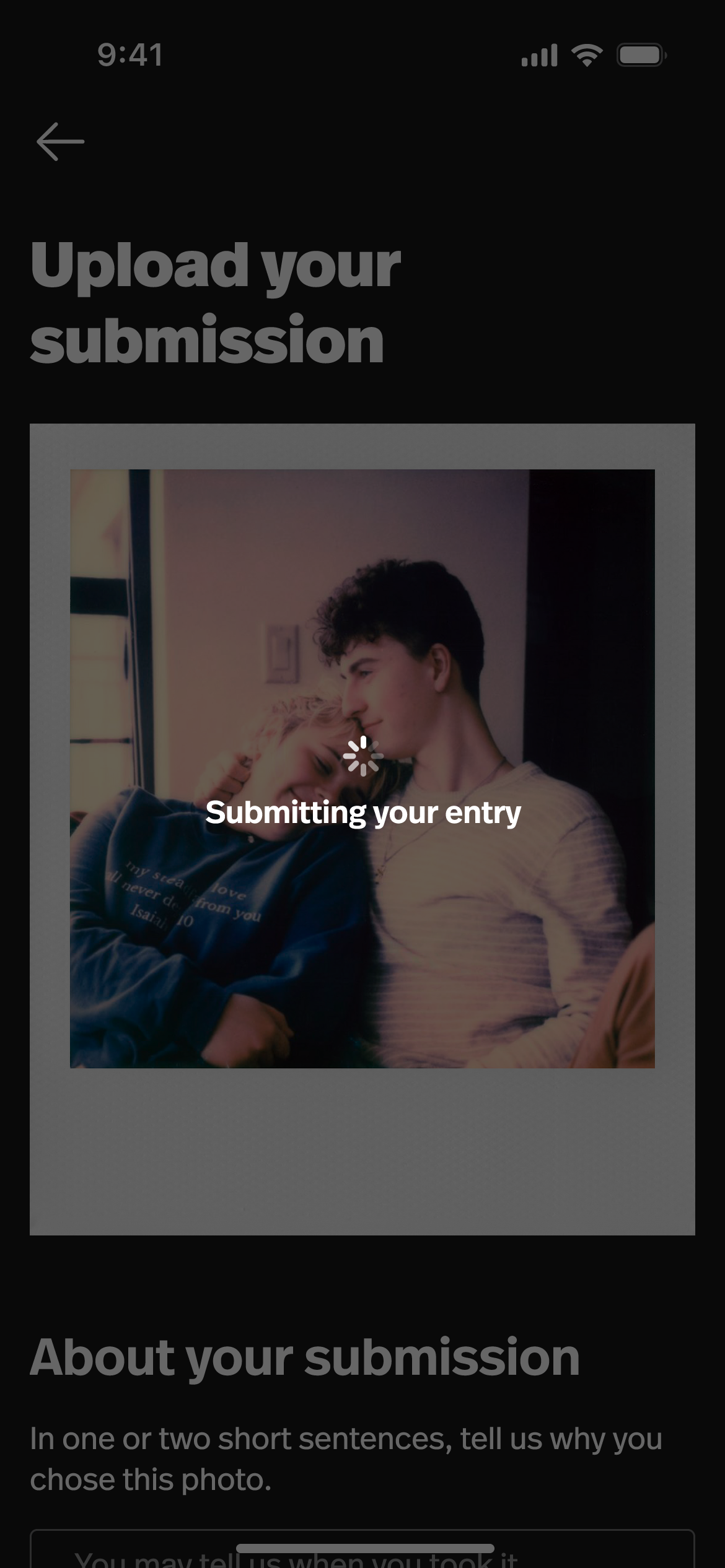
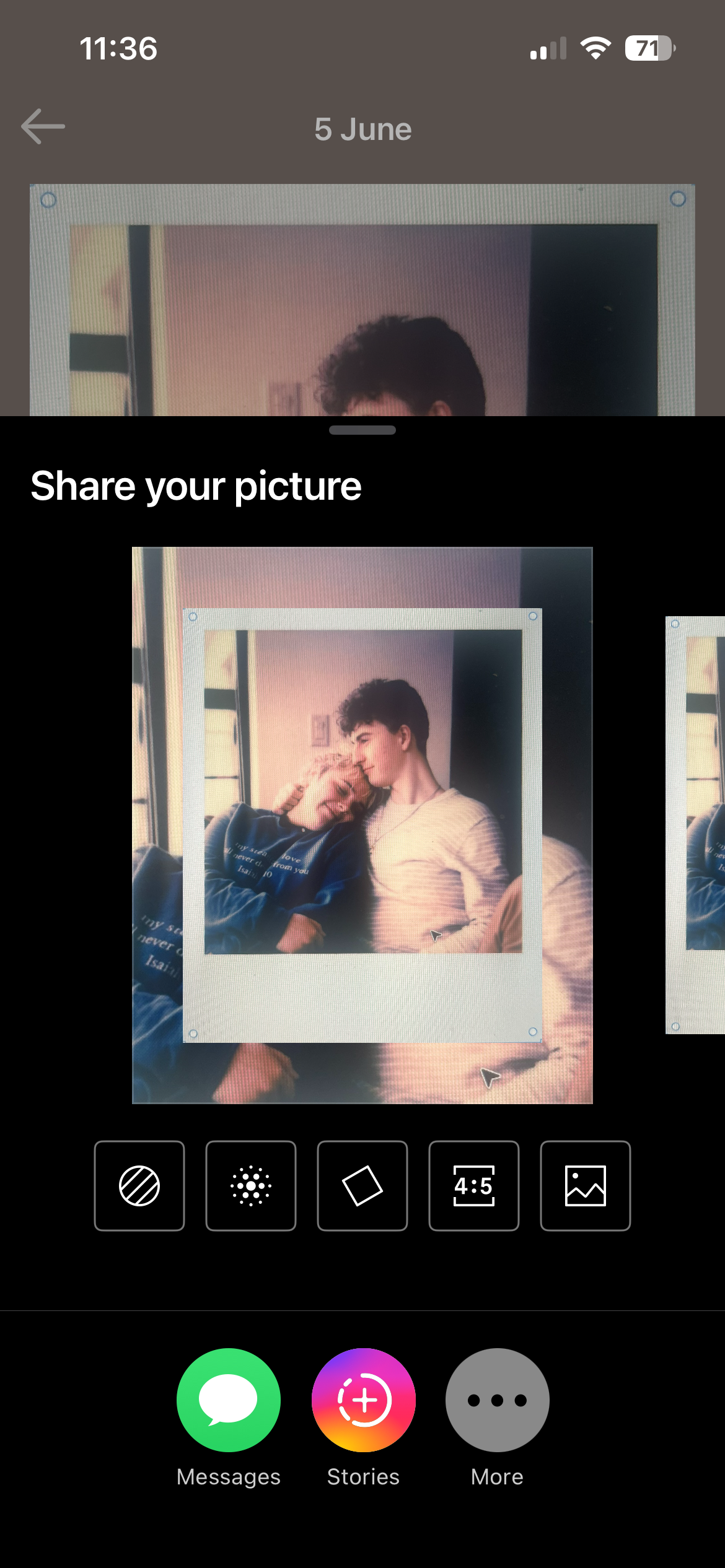
Users submit a Polaroid photo by scanning their print with the app or photographing it and uploading directly. One submission per challenge keeps it fair, and all entries are publicly featured in the gallery.
Winners are a curated pick, judged on theme interpretation, creativity, and technique — featured in an in-app winners gallery and across Polaroid's channels, with early winners also receiving a triple-pack of film.
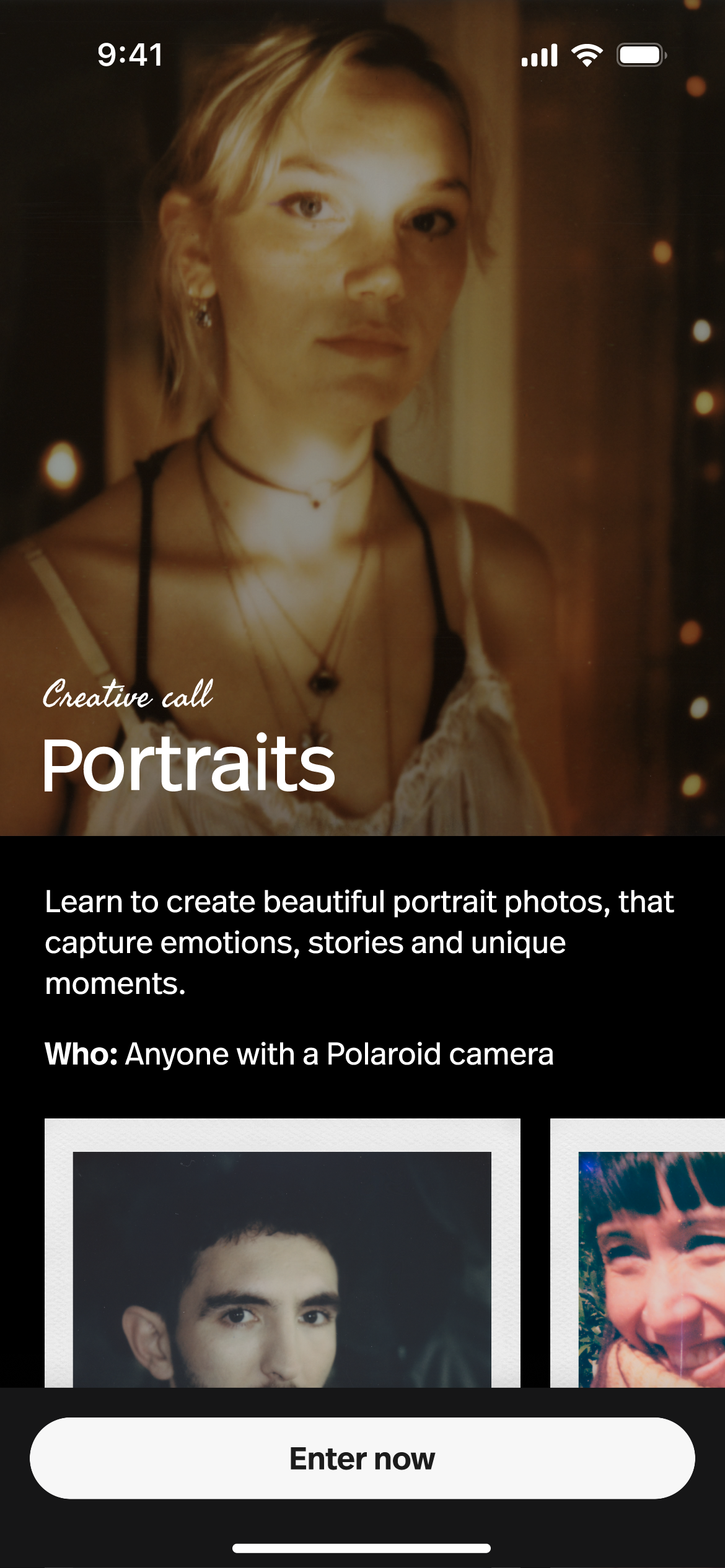
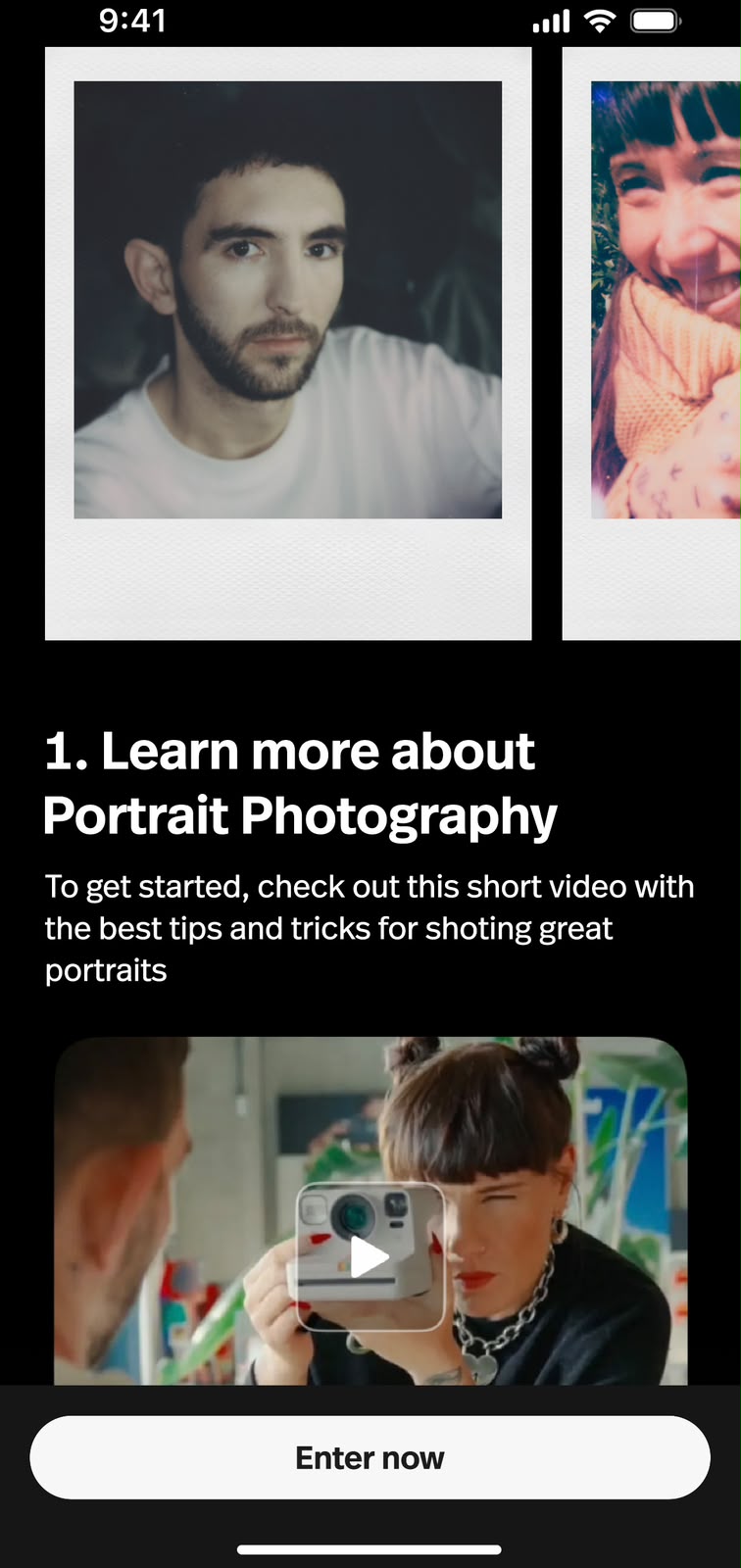


The core flow — from the monthly theme through upload, submission, and sharing.
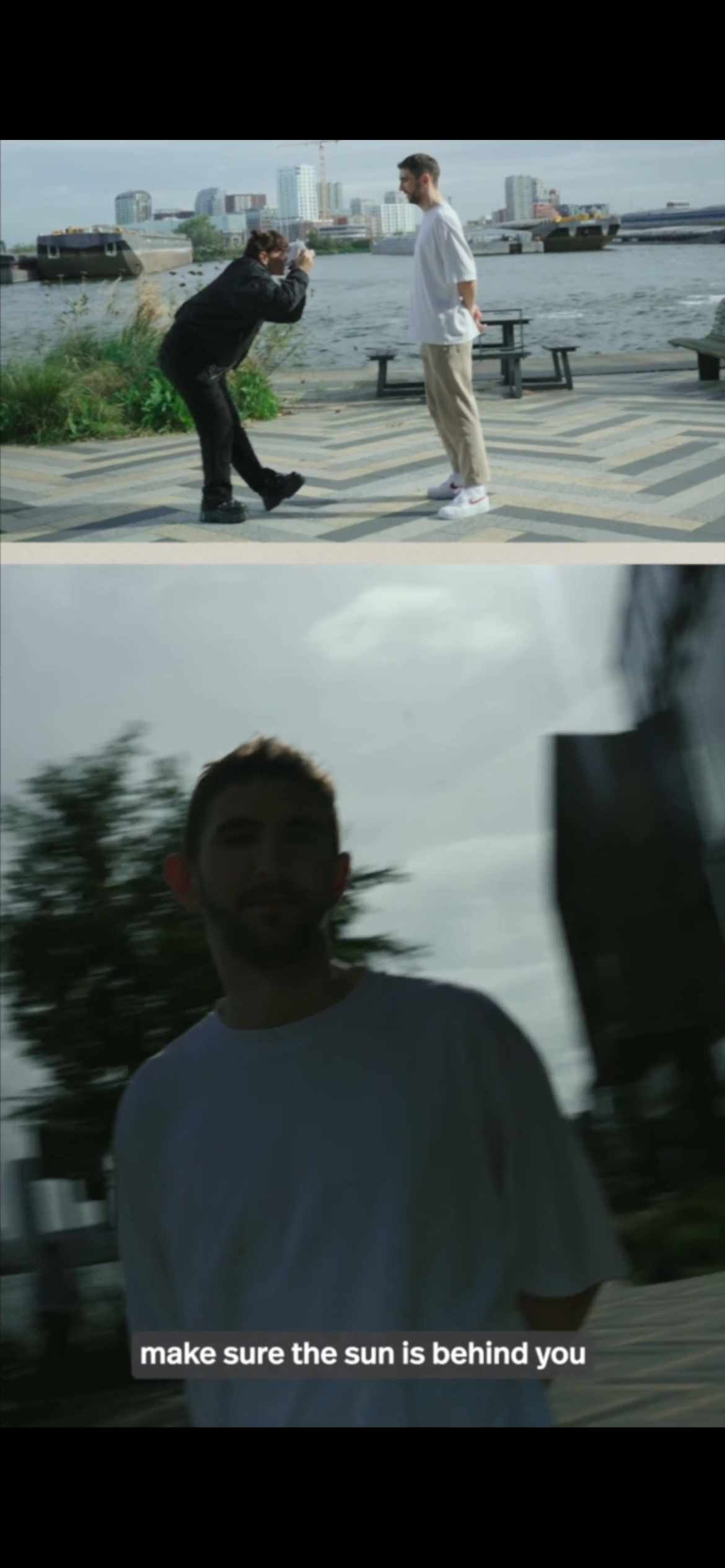
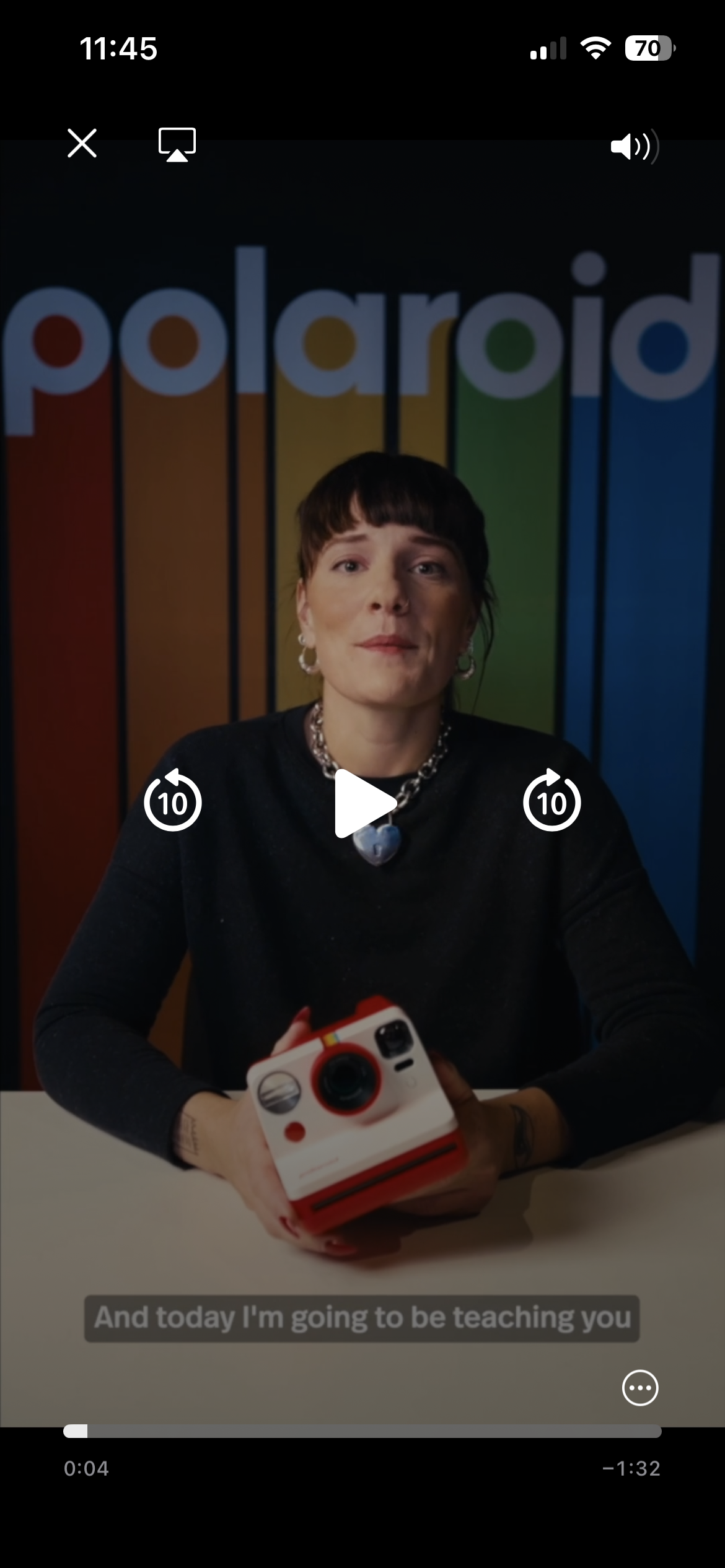
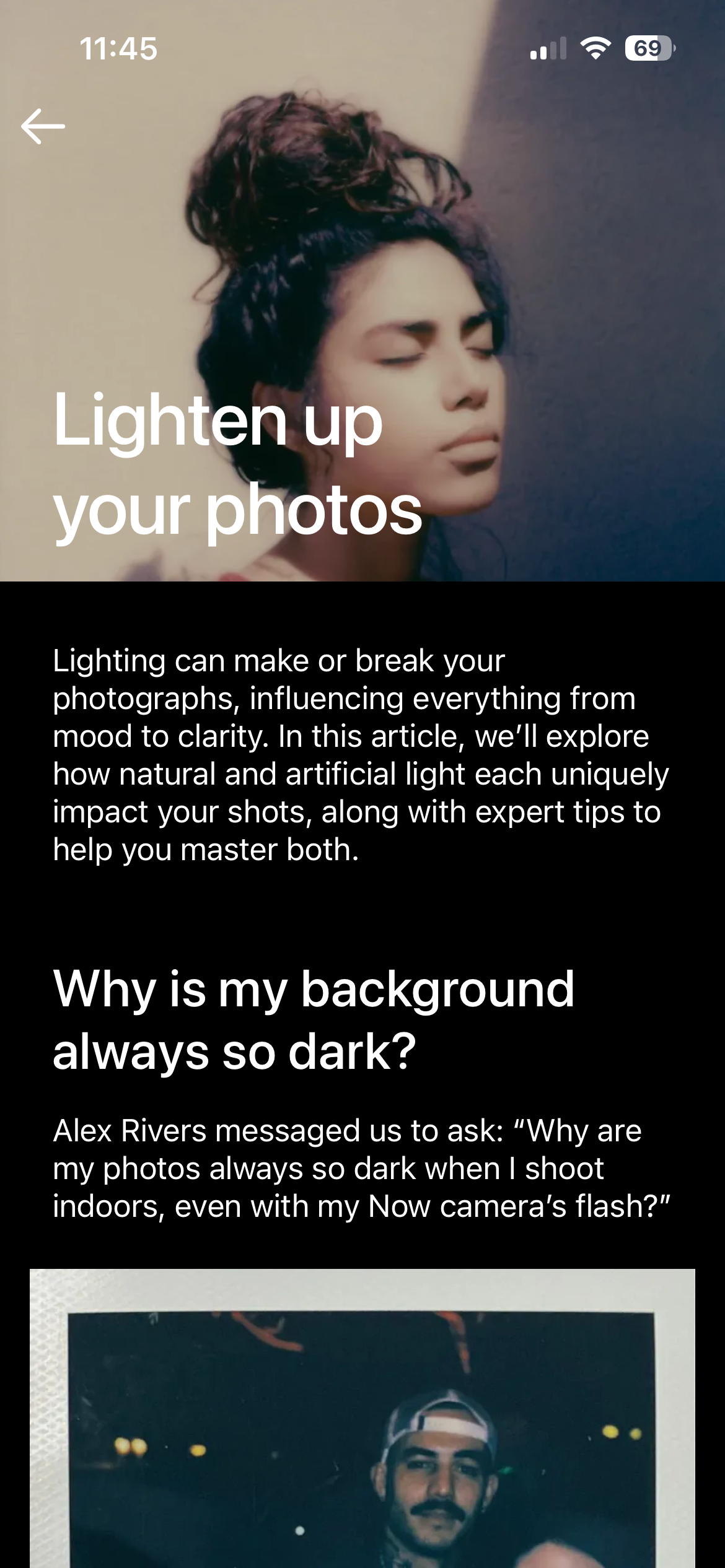
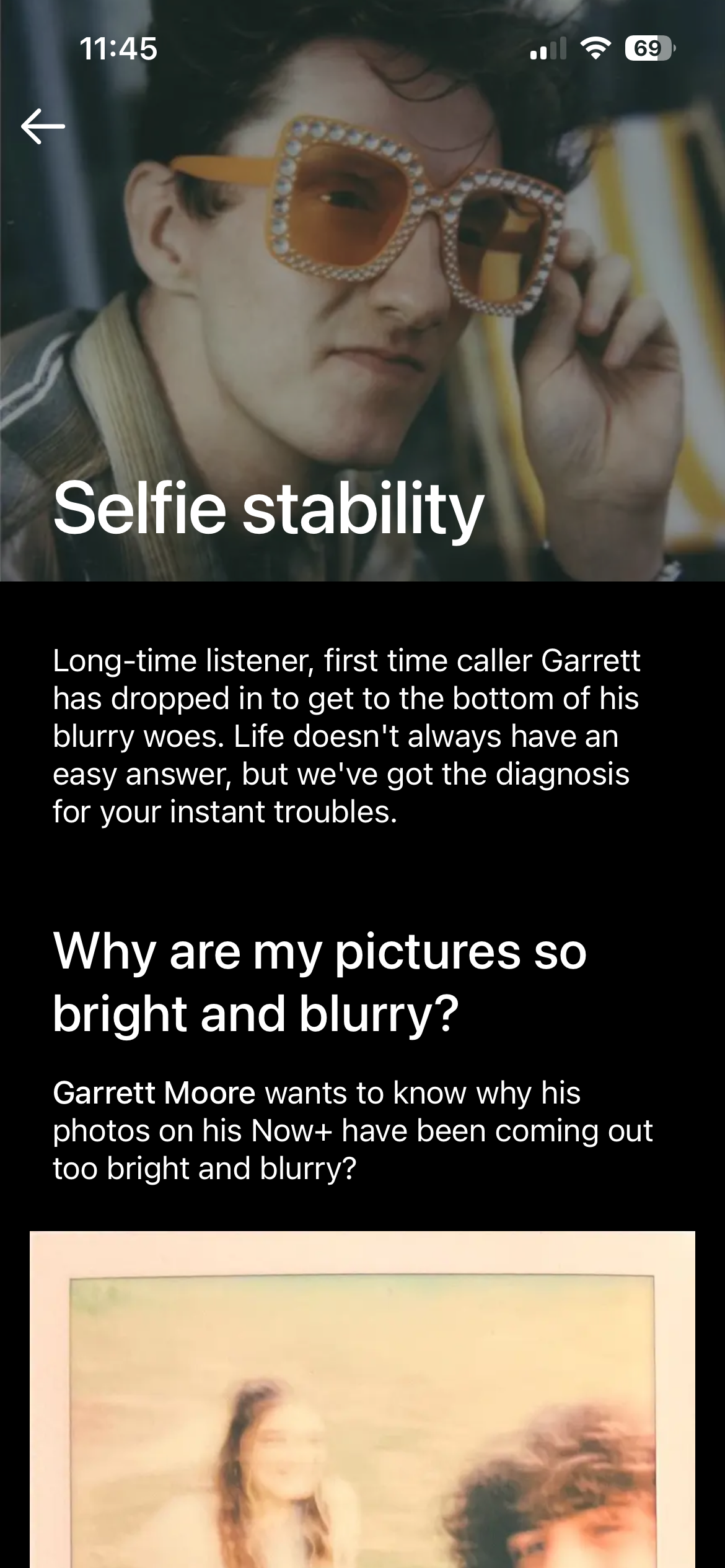
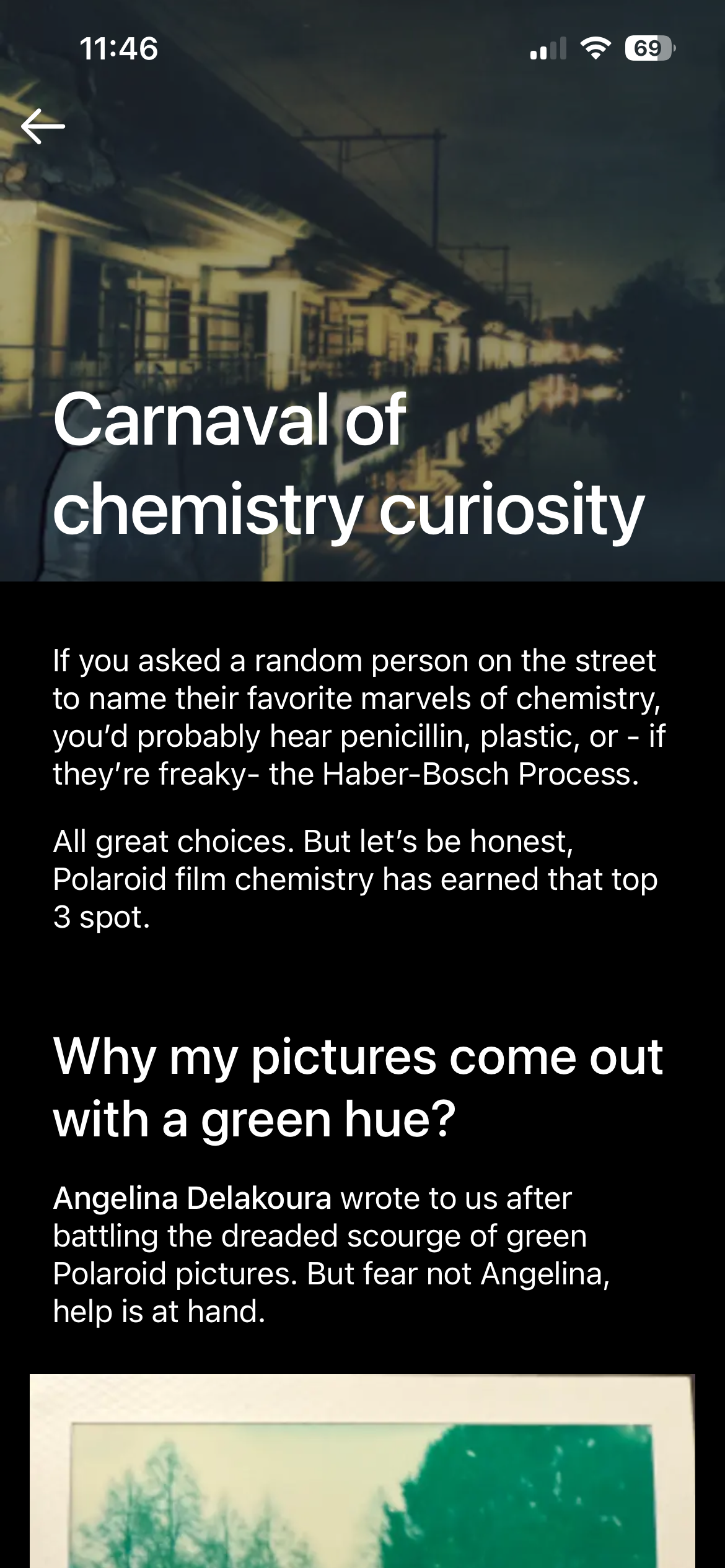
Beyond the contest, we shipped a growing library of education pieces — built by identifying the most common beginner mistakes and answering them head-on. A tips video to get started, plus diagnostic articles for the problems people hit most: photos too dark, too bright and blurry, or coming out with a green hue.


Each piece takes a real question from the community and answers it with examples — turning common frustration into fewer wasted shots.
The app-wide numbers aren't mine to claim. What I know is that the feature shipped, it's still running, and people still show up every month without a prize to win.
The number that matters most isn't the peak — it's the slope. 100 submissions became 800 over a year, with no meaningful change to the mechanic. Repetition alone grew it.
When research shows you everything that's broken, the temptation is to fix all of it. That made the work messier than it needed to be. One thing at a time, same result.
The bigger picture played out. The AI education feature eventually shipped, after my time at Polaroid. Creative Call held the ground in the meantime — kept the community warm, gave people a reason to show up. That's about as good an outcome as a fast, deliberately scoped feature can have.