01
Alfen MobileX · Hardware UX

Designing the screen for Alfen's new MobileX battery

MobileX was a new Alfen battery and a clean slate for its on-unit screen. I diagnosed the inherited, developer-built version, ran the research with Alfen's biggest client, and designed a screen for its two very different users — that client went on to order the battery in an €11.7M deal.

Role
Sole designer — research → UI → design system
Team
4 engineers, 1 product owner
Timeline
~8 months · shipped v1
Platform
Embedded touchscreen · outdoor
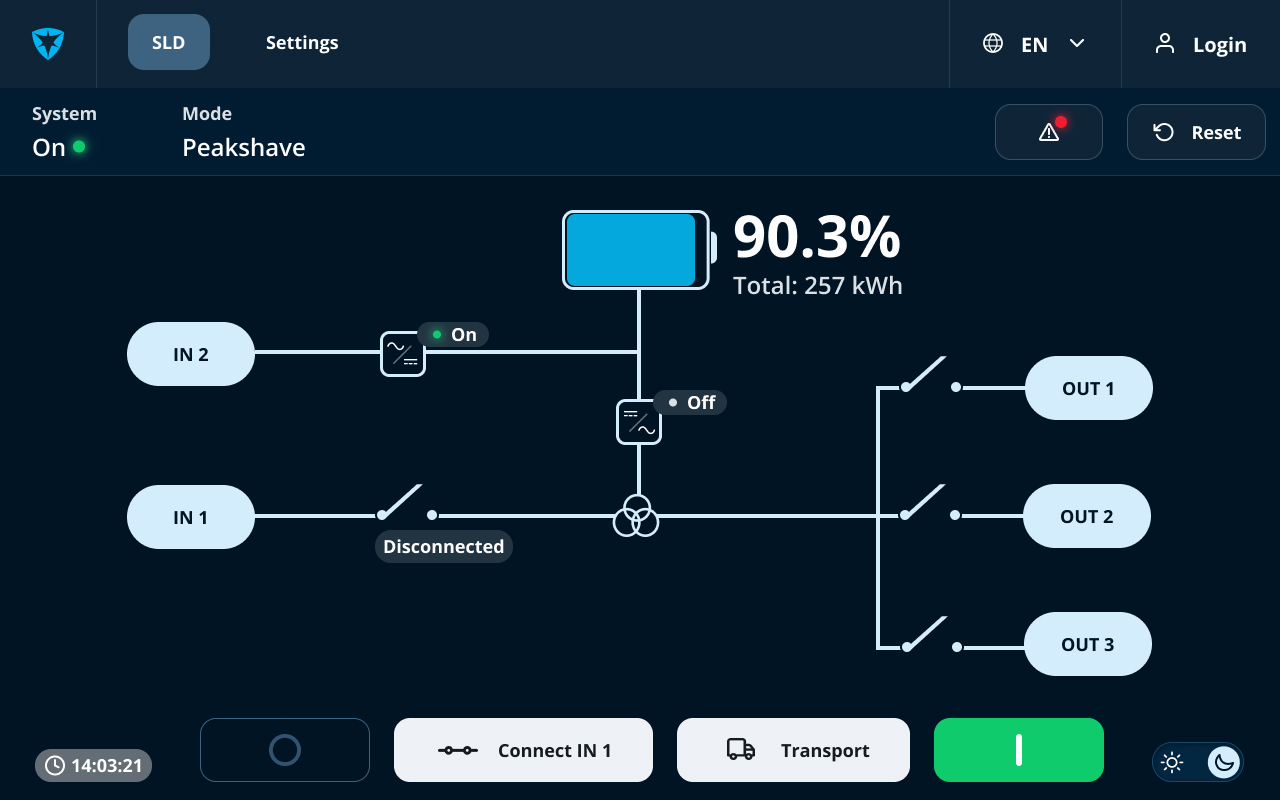
MobileX SLD home screen — dark theme
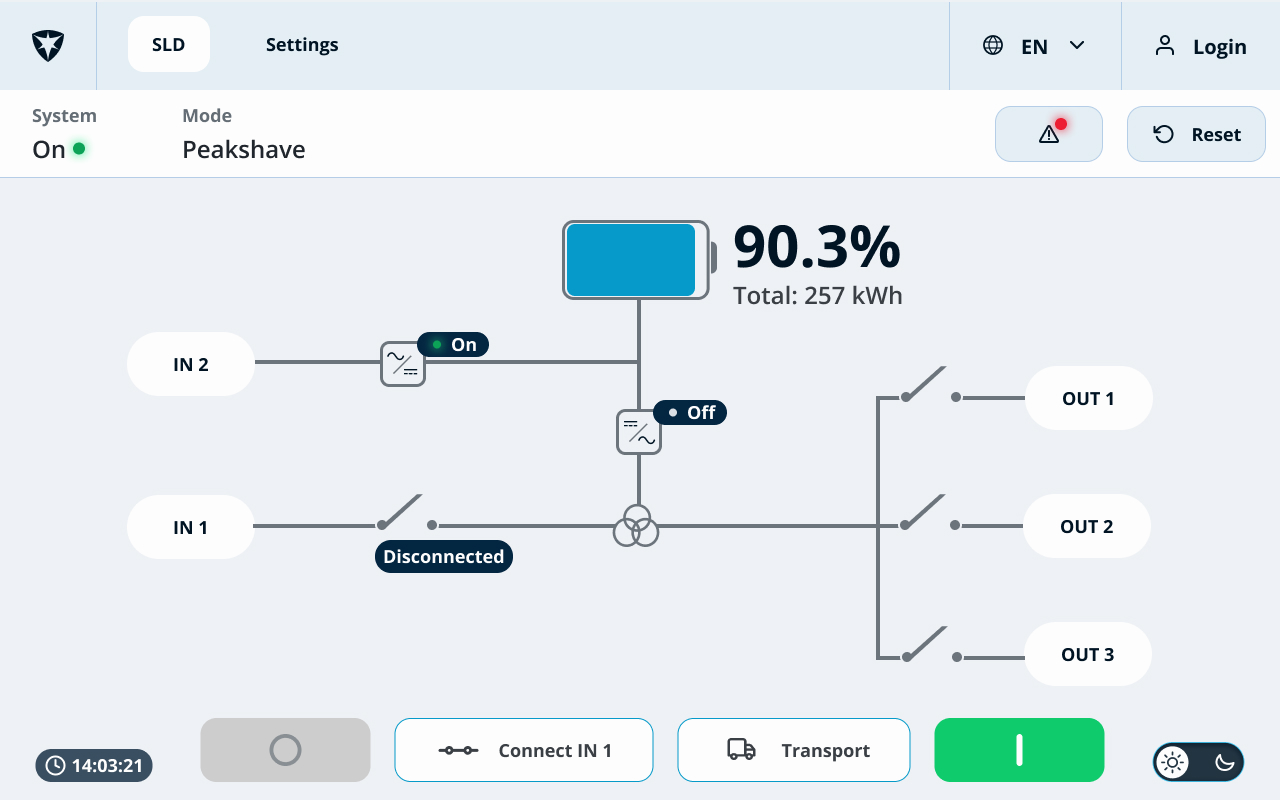
MobileX SLD home screen — light theme
02
Business context & goals

A €11.7M client on the fence — and a screen that could tip it.

Alfen builds industrial batteries. MobileX was its new mobile unit — rented out and moved between sites, operated outdoors by people who aren't engineers. The on-unit screen is what every customer touches, and Alfen's screens had a poor UX reputation: some big customers had gone as far as building their own interfaces to work around them.

The goal

Replace the inherited, developer-built screen with one designed from real customer research — clear enough for the operator to turn the battery on and check it's healthy, deep enough for the technical user to maintain it. All within hard limits: no GPU, old software, a display chosen before design was in the room.

Alfen's biggest client hadn't decided whether to buy. Involving them in the screen — and getting it right — was part of winning the €11.7M order.

What success looked like

Both users able to operate the battery without training or workarounds — and the client happy enough with the result to come on board.

03
Role

Sole designer — research, UI, and the shared visual language.

With no researcher and little product-led structure, I drove the problem-finding and prioritisation too.

I ran the research, designed the UI, and built the shared visual language — working with one front-end and a few back-end engineers and a product owner, about eight months on top of the developer-built start. The first version shipped, and it was still going when I left.

04
Approach · Research

Audited the obvious problems — then went and got the real ones.

What I did

  • 1Interviewed Alfen's biggest client — still undecided on the battery. Their operators couldn't tell what the buttons did, and their engineers wanted electrical detail the screen didn't have.
  • 2Visited a customer who'd built their own screen — a workaround that showed exactly what information the old design was missing.
  • 3Watched operators at a trading site — multiple batteries connected at once, outdoors, in bright sun: the dark-only screen was barely readable.
  • 4Tested with five operators on the actual unit — where the labelling confusion and the mixed-up screen/battery actions surfaced concretely.
05
Before & after

Dissecting the redesign.

Before · what was wrong
  • 1Unlabelled buttons. Without technical knowledge, you couldn't tell what any of them did.
  • 2Screen and battery actions mixed together. Reset — which only resets the screen — sat next to on/off, which powers the battery itself.
  • 3A diagram that didn't match the field. It didn't reflect the schematics technicians actually work with, or show the energy flow.
  • 4Dark mode only. Nearly unreadable in bright sunlight, where the unit actually lives.
After · the decisions
Redesigned screen — labelled controls, field-style station diagram, light mode
  • 1Every control labelled, with room to breathe. No guessing what a button does.
  • 2Actions separated. Reset moved to the top with its own label; on/off made the most prominent control, matching the unit's physical buttons.
  • 3The diagram redrawn like a field schematic. Transformer, each battery, and the direction of energy flow — glanceable, with detail a tap away.
  • 4Light & dark modes. Switchable for the conditions — plus an anti-glare film on the later hardware revision I helped spec.
Before · dark-only in the sun
After · light mode outdoors
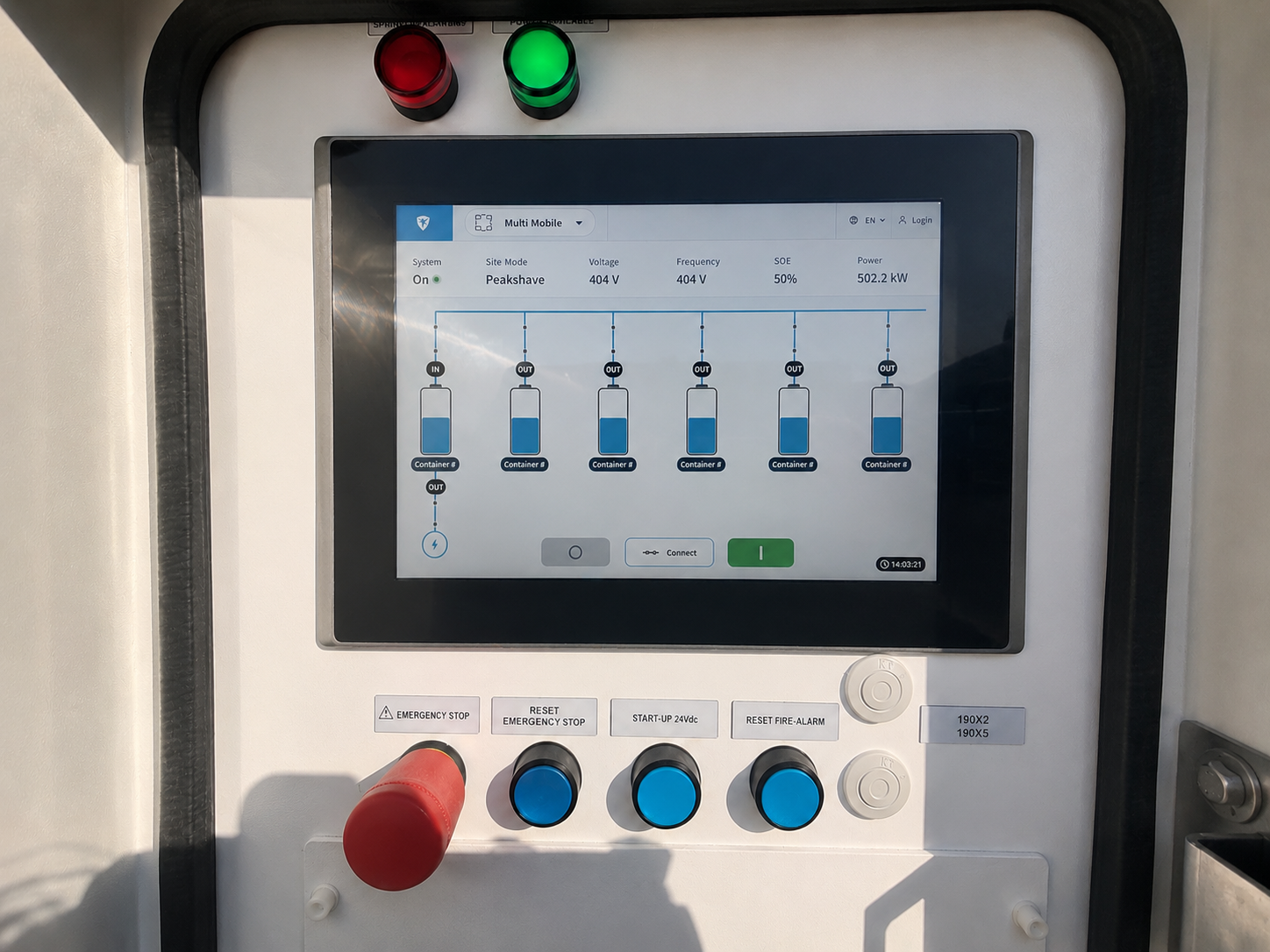
Light mode on the physical unit, readable in bright sunlight

Every decision traces back to testing — what confused operators, and what they needed to trust the unit in the field.

06
Impact

A screen that helped land Alfen's biggest client.

01
€11.7M order
Alfen's biggest client, previously undecided, ordered the battery.
02
Involved from the start
The client was in the room on the screen from early on, and their input shaped it.
03
Happy with the result
They saw their feedback taken seriously, and were pleased with the screen they got.

Alfen's biggest client had been on the fence. I ran the research with them and kept them close through the design, so the screen genuinely reflected their input — and they came on board with an €11.7M order. The screen was one piece of a much bigger deal, so I won't say it closed it; but involving them early, taking their feedback seriously, and giving them a screen they were happy with helped build the relationship that got there.

“Before, the screen was something we worked around — now it's how we operate the battery. I can actually see what the system is doing and why.”
07
Reflection

What I learned.

01
Outdoors is a different discipline
Web habits don't carry over. Sun, rain, gloves, viewing distance — the whole physical situation is part of the design, and it makes or breaks whether someone can operate the system.
02
Design within hard technical limits
No GPU, old software, careful memory management — every screen had to be achievable on the hardware we had, not the hardware we wished for.
03
Testing matters more than ever
In all weathers, with gloves on, at real stations. With hardware you don't get to patch it next sprint — you find the problems before it ships.
04
Get involved earlier in hardware
Design belongs in decisions that shape the experience — the screen choice, even the battery's physical design. Given the chance, I'd have added a shade above the screen to improve visibility in direct sun.
08
Working together

“I had the pleasure of working with Daniela, and I can't recommend her enough. She was amazing at reviewing designs and always took the time to give thoughtful feedback that really improved the final results.

What stood out most was her ability to strike the perfect balance between creating value for users and keeping the design system flexible and scalable. Her insights and attention to detail were invaluable, and it showed in the quality of work she delivered.

On top of that, she's just a great person to work with — full of positive energy and always bringing her experience to the table in a way that really made a difference. If you're looking for someone with strong UX skills and an eye for creating top-notch, presentable designs, Daniela is the person for the job.”

Rutger Stegenga — Lead UX Designer, Alfen